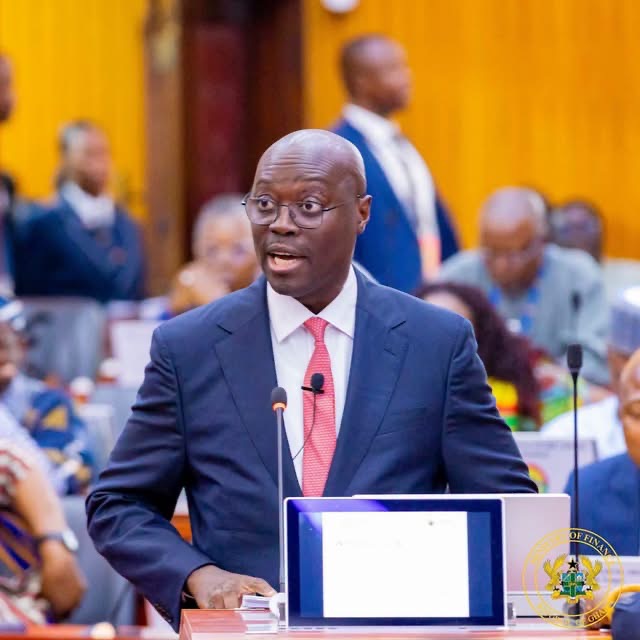





Accra, Ghana – Finance Minister Dr. Cassiel Ato Forson has defended the government’s expenditure record, arguing that accountability is demonstrated through transparency in public spending rather than political rhetoric.
Presenting details of government expenditure, Dr. Ato Forson rejected claims that the government has failed to spend adequately on priority sectors, stating that the administration has consistently financed key programmes approved under the 2026 Budget.
“Accountability is not about white dress with chain and Bible quotation, but transparency,” the Finance Minister said as he outlined payments made across critical sectors of the economy.
According to Dr. Ato Forson, the government has paid GH¢48.8 billion in compensation for public sector workers, including GH¢4 billion in contributions to SSNIT and the Tier 2 Pension Scheme.
He disclosed that GH¢21.5 billion had been paid in domestic interest obligations, while US$700 million was used to service Eurobond debt and other international debt commitments. In addition, GH¢10 billion was paid to domestic bondholders to help restore confidence in Ghana’s financial sector.
The Finance Minister further announced that GH¢4.4 billion had been released to the District Assemblies Common Fund, GH¢4.5 billion to the National Health Insurance Scheme, and GH¢1.1 billion to the MahamaCares programme to strengthen specialised healthcare.
In the education sector, he said government had disbursed GH¢4.2 billion to GETFund, GH¢1.8 billion to support the Free Secondary Education Programme, GH¢76 million as Capitation Grant, GH¢46 million for BECE registration, GH¢537 million for the No Fees Stress Policy, GH¢104 million for Teacher Trainee Allowances, GH¢144 million for Nursing Trainee Allowances, and GH¢915 million for goods and services under the Ministry of Education, including the procurement of sanitary pads.
Dr. Ato Forson also highlighted spending on social intervention programmes, including GH¢485 million for LEAP beneficiaries, GH¢877 million for the Ghana School Feeding Programme, GH¢459 million to the Youth Employment Agency, and GH¢45 million for the National Apprenticeship Programme.
On infrastructure, he stated that government had spent GH¢11.5 billion on capital expenditure, including GH¢6.5 billion for the Big Push Infrastructure Programme and GH¢1.7 billion for the Road Maintenance Trust Fund.
The energy sector received GH¢7.1 billion to ensure stable electricity supply, while GH¢5.3 billion was used to clear legacy government arrears.
In the agriculture sector, the Finance Minister disclosed that GH¢1.1 billion had been allocated to the Ministry of Food and Agriculture for flagship initiatives, including Feed Ghana, fertiliser and certified seed distribution, irrigation infrastructure and the National Food Buffer Stock Company. He added that GH¢551 million had been placed in an escrow account to facilitate the establishment of Farmer Service Centres.
Other payments announced include GH¢961 million to the Ghana National Petroleum Corporation (GNPC), GH¢458 million to the Mineral Development Fund, GH¢477.4 million to IRECOP for environmental sustainability, GH¢93 million for Assembly Members’ Allowances, GH¢58 million to support Ghana’s participation in the 2026 FIFA World Cup, GH¢7.9 billion for government goods and services, and GH¢16 million to the National Anti-Illegal Mining Operations Secretariat (NAIMOS) to combat illegal mining.
Dr. Ato Forson said the figures demonstrate the government’s commitment to transparency and prudent public financial management, insisting that the expenditure reflects investments in economic recovery, social protection, infrastructure, education, healthcare and agriculture.
— Dennis Awuni | Parliamentary Correspondent | Our Democracy News (DNS NEWS GH)