


By Our Democracy News GH
October 17, 2026
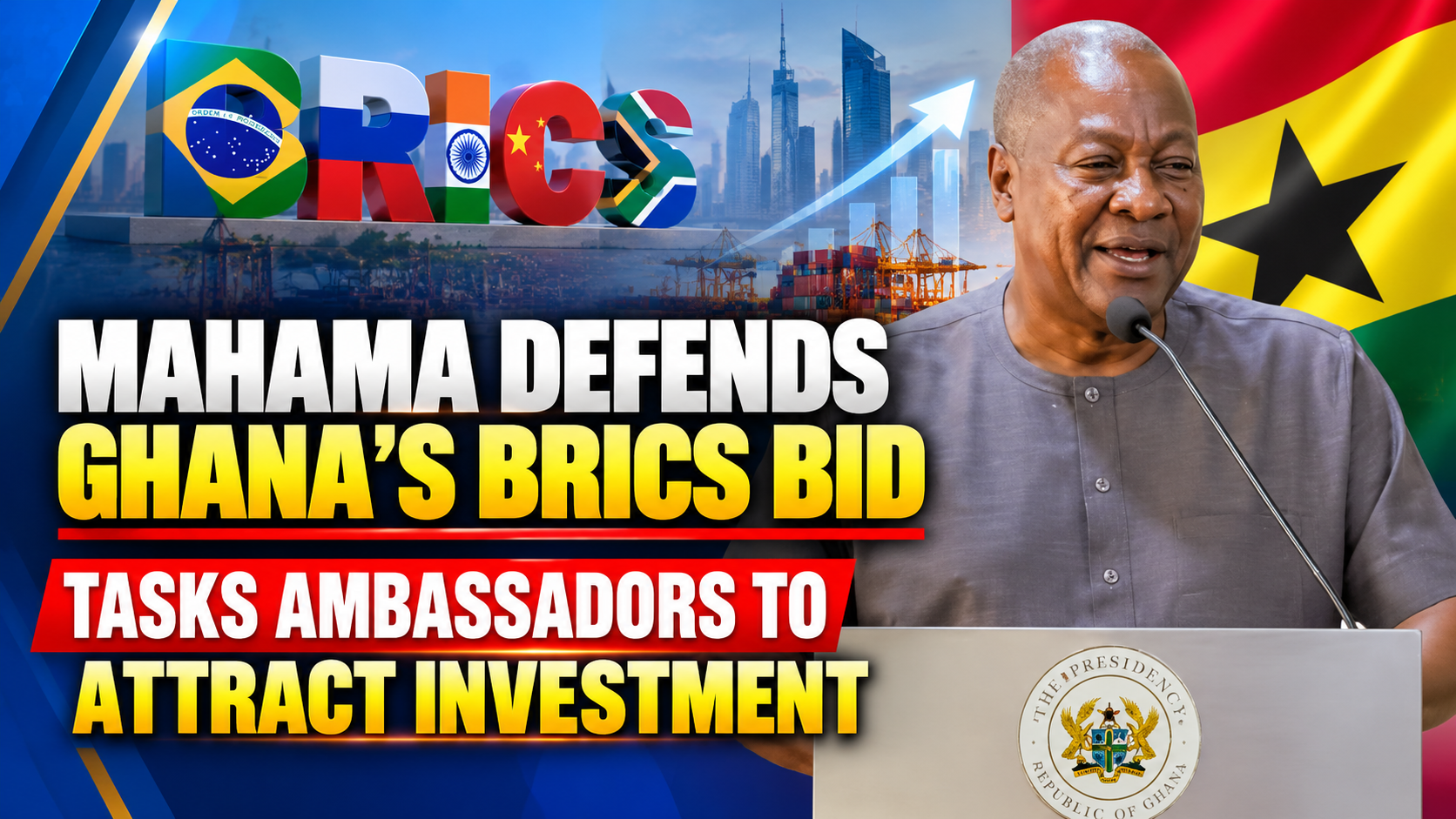
President John Dramani Mahama has defended Ghana’s decision to seek partnership with BRICS countries, saying the move is aimed at diversifying the country’s development partnerships, attracting investment and expanding opportunities for trade, industrialisation and technology transfer.
He has also challenged Ghana’s newly appointed ambassadors to make economic diplomacy deliver tangible benefits by attracting investors, opening international markets for local businesses and facilitating partnerships that create jobs and support national development.
President Mahama made the remarks at the swearing-in ceremony of four ambassadors at the Jubilee House on Friday, October 16, 2026.
“Ghana’s decision to apply for partnership with the BRICS countries reflects our determination to broaden our development partnerships and deepen South-South cooperation,” he said.
The President explained that Ghana’s engagement with BRICS was part of a broader strategy to respond to changing global economic conditions while maintaining its longstanding relationships with traditional international partners.
He cited shifting international alliances, rising trade restrictions and increasing competition for technology and natural resources as reasons Ghana must adopt a more strategic approach to its foreign relations.
Mr Mahama urged Ghana’s diplomatic missions to explain the country’s BRICS engagement to their host governments and international partners within the context of its broader economic and foreign policy objectives.
He stressed that the success of Ghana’s economic diplomacy should be measured by the practical opportunities diplomats bring to the country.
“Judge the success of your economic diplomacy by the opportunities you can bring to Ghana,” he told the ambassadors.
The President further directed the diplomatic missions to monitor investment proposals and agreements, identify challenges affecting their implementation and work with the Ministry of Foreign Affairs and other relevant institutions to address them.
He said Ghana must strengthen its ability to retain greater value from its natural resources by promoting local processing and expanding domestic industrial capacity.
He cited the establishment of the Ghana Gold Board and plans to promote local processing of lithium, bauxite and manganese as part of efforts to ensure the country derives greater economic benefits from its resources.
The four envoys sworn into office were Nana Antwiwaa Dodoo, Ambassador to Angola; Louis Kwame Obeng, Ambassador to Qatar; Evelyn Korantemaa Ofosu-Amable, Ambassador to Israel; and Jedidiah Reuben Adogla, Ghana’s Permanent Representative to the United Nations Office in Geneva, Switzerland.
President Mahama emphasised that pursuing new international partnerships would not mean abandoning Ghana’s existing relationships. Instead, he said, the country sought to expand its options to advance its development priorities.
He urged the ambassadors to focus on securing investment and expertise capable of transforming Ghana’s natural resources into productive industries, expanding economic opportunities and creating sustainable jobs.