






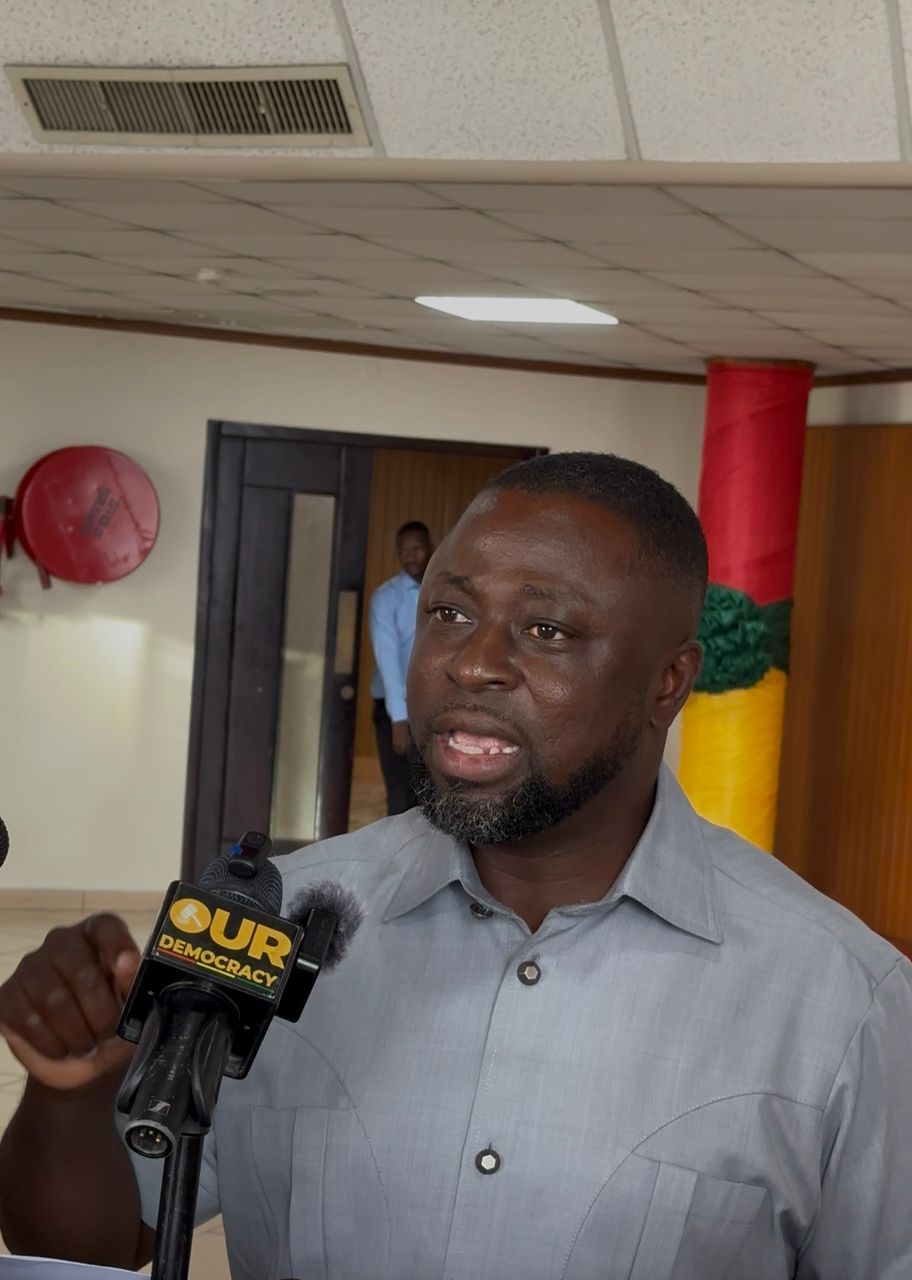
The Member of Parliament for Offinso North, Fred Kyei Asamoah, has called for urgent government investment in the Akomadan Irrigation Scheme to enable year-round tomato production and reduce Ghana’s heavy reliance on imports.
Delivering a statement in Parliament in March 2026, Dr. Asamoah warned that Ghana faces a critical tomato deficit, with production at 468,000 metric tonnes against a demand of 1,265,000 metric tonnes in 2023—leaving a gap of about 60%. He stressed that the situation is worsening as demand rises while production declines.
He linked the urgency to recent developments in Burkina Faso, where a ban on tomato exports has exposed Ghana’s vulnerability and food security risks due to dependence on external supply.
According to the MP, Offinso North—particularly Akomadan—remains a major tomato-producing hub, but farmers face serious challenges including seasonal production limits and post-harvest losses of up to 42%. These inefficiencies, he noted, have led to sharp price fluctuations, with tomato crates rising as high as GH¢6,000 at the farm gate.
Dr. Asamoah argued that the issue is not only about production but a broader systems failure involving storage, processing, and market access.
He highlighted that Akomadan already has a strong irrigation foundation dating back to the 1970s, with support from the government and the World Bank, and later rehabilitated under John Agyekum Kufuor. Subsequent upgrades between 2012 and 2018 introduced sprinkler and drip irrigation systems, though coverage remains limited.
Out of 624 hectares identified for irrigation, only 171 hectares have been developed, with a significant portion currently underutilized. Despite further rehabilitation efforts in 2023 under Nana Akufo-Addo, most farmers still depend on rainfall.
The MP therefore urged government and stakeholders to scale up irrigation infrastructure, adopt modern technologies, and invest in storage, processing, farmer support, and road networks to improve productivity and market access.
He emphasized that with the right investment, Offinso North could meet national tomato demand year-round, stabilize prices, create jobs, and eliminate reliance on imports.
Dr. Asamoah concluded that rising prices, post-harvest losses, and risks faced by traders underscore the need for sustained investment in irrigation-driven agriculture to secure Ghana’s food future.