




Minority Leader Alexander Afenyo-Markin has warned that Ghana risks sliding towards what he describes as “elective dictatorship” if the governing NDC’s parliamentary supermajority is used to frustrate scrutiny and silence the opposition.
He has called on the Speaker of Parliament to protect minority participation and ensure that uncomfortable questions about government activities are given the necessary parliamentary attention.
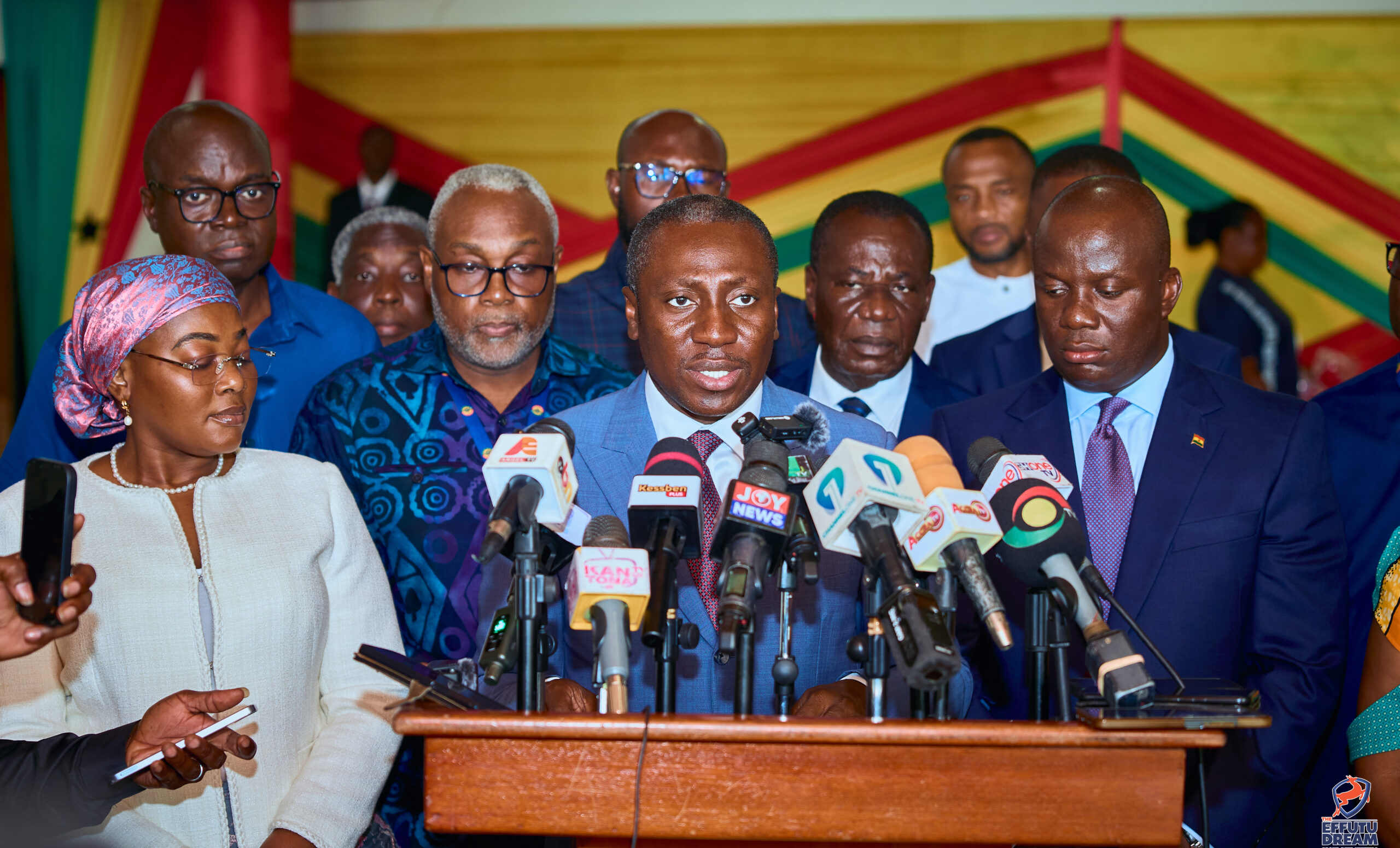
Speaking at a press conference in Parliament following the Minority’s walkout over the removal of Damongo MP Samuel Abu Jinapor from the chamber, Afenyo-Markin accused the Majority of using its numerical strength in ways that could undermine democratic accountability.
He argued that although the NDC commands more than two-thirds of Parliament, its numerical advantage should not become a licence to suppress dissent or prevent the opposition from performing its constitutional oversight responsibilities.
“An electoral mandate grants no licence to suffocate accountability,” he stated.
The Minority Leader maintained that the Majority has the numbers to pass decisions, but the opposition must retain an effective voice to scrutinise government policies and actions.
He cautioned that when executive dominance is reinforced by parliamentary numbers and scrutiny is repeatedly frustrated, elective dictatorship becomes a real danger.
Afenyo-Markin accuses Speaker of disproportionate treatment of Abu Jinapor
The Minority Leader also defended Samuel Abu Jinapor, the MP for Damongo and Ranking Member on Foreign Affairs and Regional Integration, over his removal from Parliament’s chamber.
He explained that Abu Jinapor had raised allegations concerning the purported sale of diplomatic passports for amounts ranging from US$10,000 to US$50,000 and sought explanations from the Minister for Foreign Affairs.
According to Afenyo-Markin, when the Speaker directed the Damongo MP to withdraw the allegation, he initially requested clarification on the specific statement he was expected to retract.
He maintained that Abu Jinapor expressly complied after the clarification, stating: “Mr Speaker, I withdraw.”
However, the Minority Leader questioned why the instruction for the MP to leave the chamber was maintained despite his withdrawal.
He described the decision as disproportionate and, in its effect, an act of parliamentary bullying.
Afenyo-Markin acknowledged the Speaker’s responsibility to maintain order and require allegations to be substantiated but argued that authority must be exercised with restraint.
He said a request for clarification should not automatically be interpreted as defiance and that an express withdrawal in compliance with the Speaker’s directive should be acknowledged rather than punished.
Minority alleges illicit trade in diplomatic and service passports
Afenyo-Markin further disclosed that the Minority possesses supporting material which, in its assessment, raises serious concerns about alleged false representations and impersonation in the procurement of diplomatic and service passports through the Ministry of Foreign Affairs.
He said there were additional allegations suggesting that the practice had developed into an illicit trade.
The Minority Leader announced that the caucus, through its Foreign Affairs team, would present its evidence for examination and verification, while allowing persons implicated in the allegations an opportunity to respond.
He stressed that diplomatic passports carry the authority and reputation of Ghana and that any credible indication of their procurement through false representations must be investigated.
“A diplomatic passport carries the authority and reputation of the Republic. Any credible indication that it is being obtained through false representations demands scrutiny of the highest seriousness,” he stated.
He questioned where such concerns should be raised if Parliament became unwilling to entertain uncomfortable questions about the conduct of public institutions.
Afenyo-Markin invokes Article 103 to demand parliamentary scrutiny
The Minority Leader cited Article 103 of the 1992 Constitution and Parliament’s Standing Orders, which provide for parliamentary committees to investigate ministries and government departments.
He argued that the constitutional oversight responsibility of Parliament must not be weakened by political disagreements or disclosures that may be inconvenient to the government.
He called for the evidence surrounding the diplomatic passport allegations to be examined, its authenticity tested and the Minister for Foreign Affairs given an opportunity to respond.
He further urged the Speaker to distinguish between legitimate disagreement and disrespect while ensuring that parliamentary procedures serve the interests of the Ghanaian people.
Minority Leader references US elections to caution NDC Majority
In another political argument, Afenyo-Markin referred to the United States midterm elections, claiming that American voters had stripped the Republican Party of its majorities in both chambers of Congress just two years after giving it control.
He used the example to remind the NDC Majority that electoral power is temporary and that the same electorate that gives a political party a mandate can withdraw it.
He urged the governing party to respect constitutional limits and exercise its parliamentary authority responsibly.
According to him, the Speaker must remain a neutral institution capable of protecting fairness and ensuring that both sides of the House can perform their duties.
Afenyo-Markin alleges intimidation and harassment of Minority MPs
The Minority Leader also accused the government of using state institutions to intimidate opposition lawmakers.
He claimed that some Minority MPs had faced arrests, detention and difficult bail conditions, describing what he considered a pattern of coordinated pressure intended to weaken the opposition and silence its members.
However, he stressed that the Minority did not oppose lawful accountability for any citizen, including its own members.
“What we resist and will never desist from resisting is the conversion of state power into an instrument of political submission,” he declared.
He insisted that the Minority would continue to challenge actions it considered an abuse of state authority and would not be intimidated into abandoning its parliamentary responsibilities.
Afenyo-Markin challenges Ablakwa to defend principles he championed in opposition
The Minority Leader also directly challenged Foreign Affairs Minister Samuel Okudzeto Ablakwa to defend the principles of accountability and transparency he championed while in opposition.
Referencing Ablakwa’s record of questioning previous governments, Afenyo-Markin argued that the minister should not remain silent when similar accountability concerns are raised against the current administration.
He stated that Ablakwa had been vocal in opposition and should now demonstrate the same commitment to transparency and public accountability in government.
The Minority Leader maintained that the diplomatic passport allegations required a substantive response rather than being overshadowed by the parliamentary disagreement.
Minority vows to continue holding government accountable
Concluding his address, Afenyo-Markin reaffirmed the Minority’s commitment to its oversight responsibilities, invoking the political tradition of Danquah, Dombo and Busia and the history of the United Party.
He said the NPP’s political tradition was rooted in the defence of liberty, democratic rights and freedom, adding that the caucus would not abandon those principles in the face of political pressure.
He also appealed to Ghanaians to continue expecting their elected representatives to ask difficult questions and defend the public interest.
“Honourable Jinapor shall not be silenced. The Caucus shall not be silenced. We shall hold the Government and its functionaries accountable, as Ghanaians have entrusted us to do,” he declared.
He assured supporters that the Minority would return to its parliamentary duties with determination, insisting that its responsibility to scrutinise government actions remained central to its constitutional mandate.