


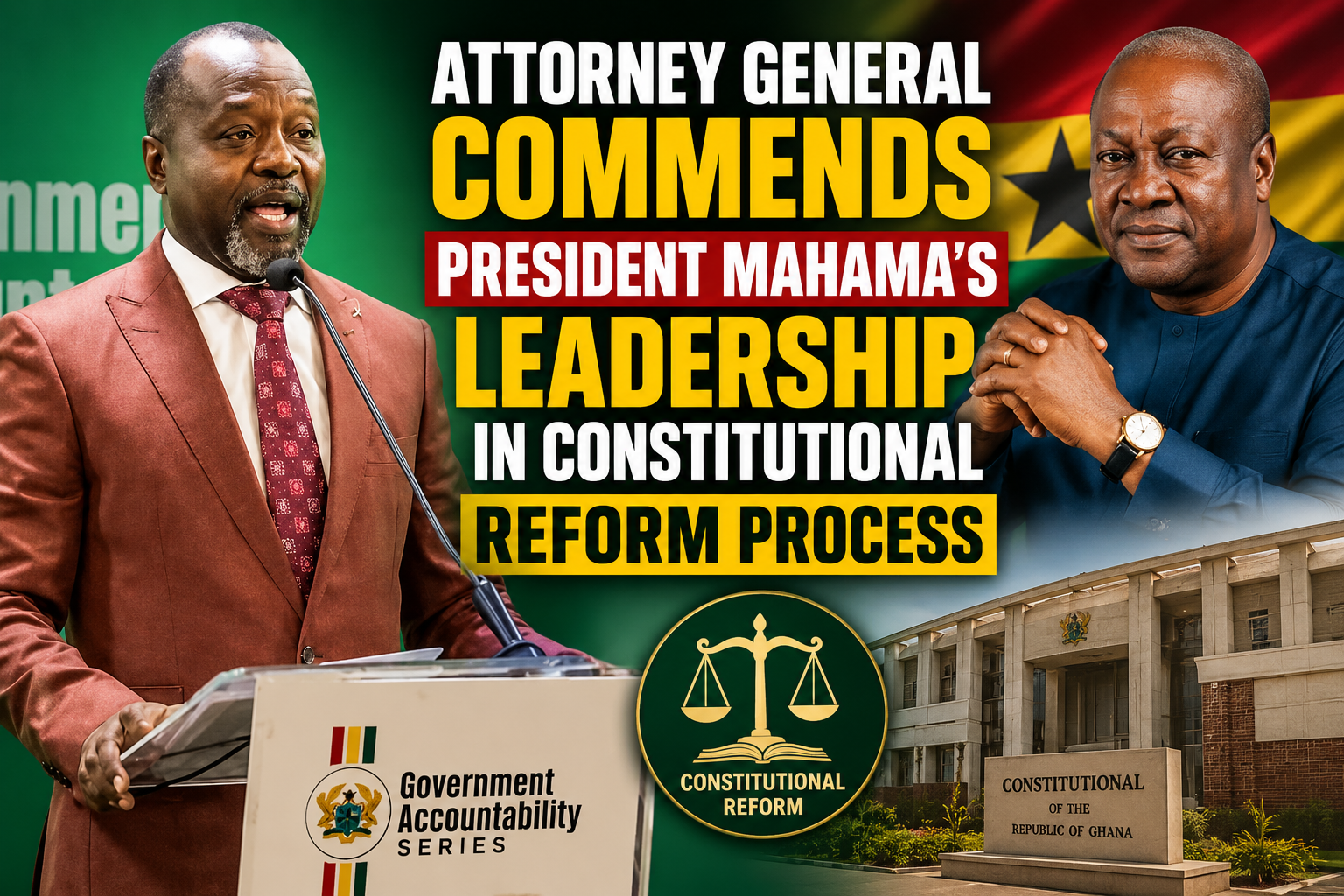
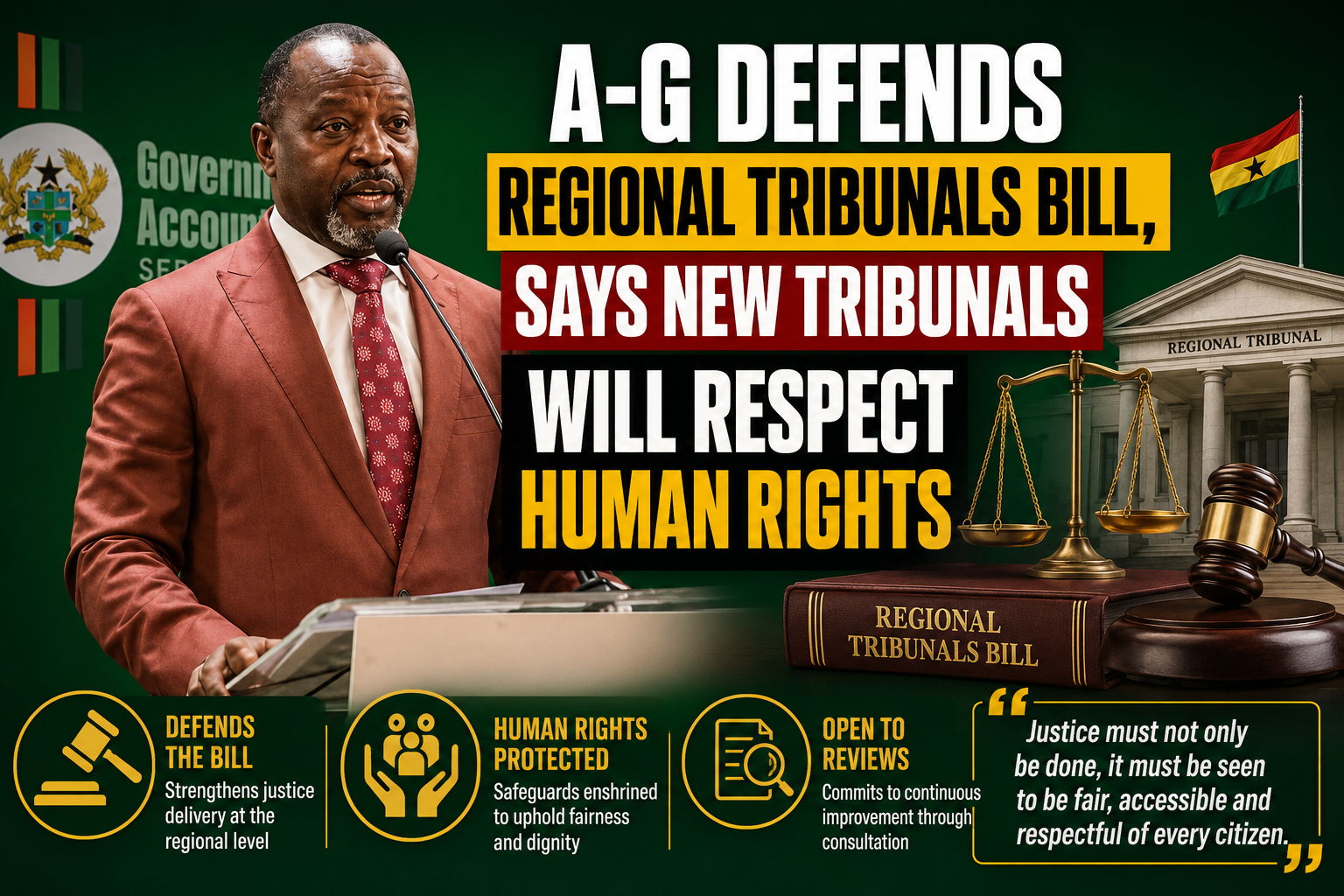
The Attorney General has defended the establishment of regional tribunals, insisting that the proposed tribunals are supported by the 1992 Constitution and will operate within Ghana’s constitutional framework.
Speaking at a press conference, the Attorney General explained that Ghana’s Constitution establishes one integrated judiciary and already recognises regional tribunals as part of the judicial system.
He added that Article 126 of the Constitution gives Parliament the authority to establish lower courts and tribunals when necessary.
Addressing concerns about the human rights record of tribunals in the past, the Attorney General acknowledged that critics have raised questions about whether previous tribunals adequately protected fundamental rights.
However, he stressed that the proposed regional tribunals cannot operate in the same manner as those of the past.
According to him, the new tribunals will be governed by procedures established by law and will be required to uphold the fundamental human rights and procedural safeguards provided under the Constitution.
He cited Article 19, which guarantees the right to a fair trial, and argued that a regional tribunal cannot ignore constitutional protections and expect its decisions to be upheld on appeal.
“I believe that what we are doing is in tandem with the letter and spirit of the Constitution,” he stated.
The Attorney General maintained that there is both “textual support” and what he described as “spiritual support” in the Constitution for the Regional Tribunals Bill.
He rejected claims that the legislation is not in the interest of Ghanaians, arguing that tribunals provide an important opportunity for citizens to participate in the administration of justice.
He noted that the Constitution states that justice emanates from the people and must be administered in their name by the judiciary.
The Attorney General added that the constitutional definition of the judiciary includes regional tribunals as well as other lower courts or tribunals that Parliament may establish by law.Speaking at a press conference, the Attorney General explained that Ghana’s Constitution establishes one integrated judiciary and already recognises regional tribunals as part of the judicial system.
He added that Article 126 of the Constitution gives Parliament the authority to establish lower courts and tribunals when necessary.
Addressing concerns about the human rights record of tribunals in the past, the Attorney General acknowledged that critics have raised questions about whether previous tribunals adequately protected fundamental rights.
However, he stressed that the proposed regional tribunals cannot operate in the same manner as those of the past.
According to him, the new tribunals will be governed by procedures established by law and will be required to uphold the fundamental human rights and procedural safeguards provided under the Constitution.
He cited Article 19, which guarantees the right to a fair trial, and argued that a regional tribunal cannot ignore constitutional protections and expect its decisions to be upheld on appeal.
“I believe that what we are doing is in tandem with the letter and spirit of the Constitution,” he stated.
The Attorney General maintained that there is both “textual support” and what he described as “spiritual support” in the Constitution for the Regional Tribunals Bill.
He rejected claims that the legislation is not in the interest of Ghanaians, arguing that tribunals provide an important opportunity for citizens to participate in the administration of justice.
He noted that the Constitution states that justice emanates from the people and must be administered in their name by the judiciary.
The Attorney General added that the constitutional definition of the judiciary includes regional tribunals as well as other lower courts or tribunals that Parliament may establish by law.