





By Our Democracy News GH
October 20, 2026
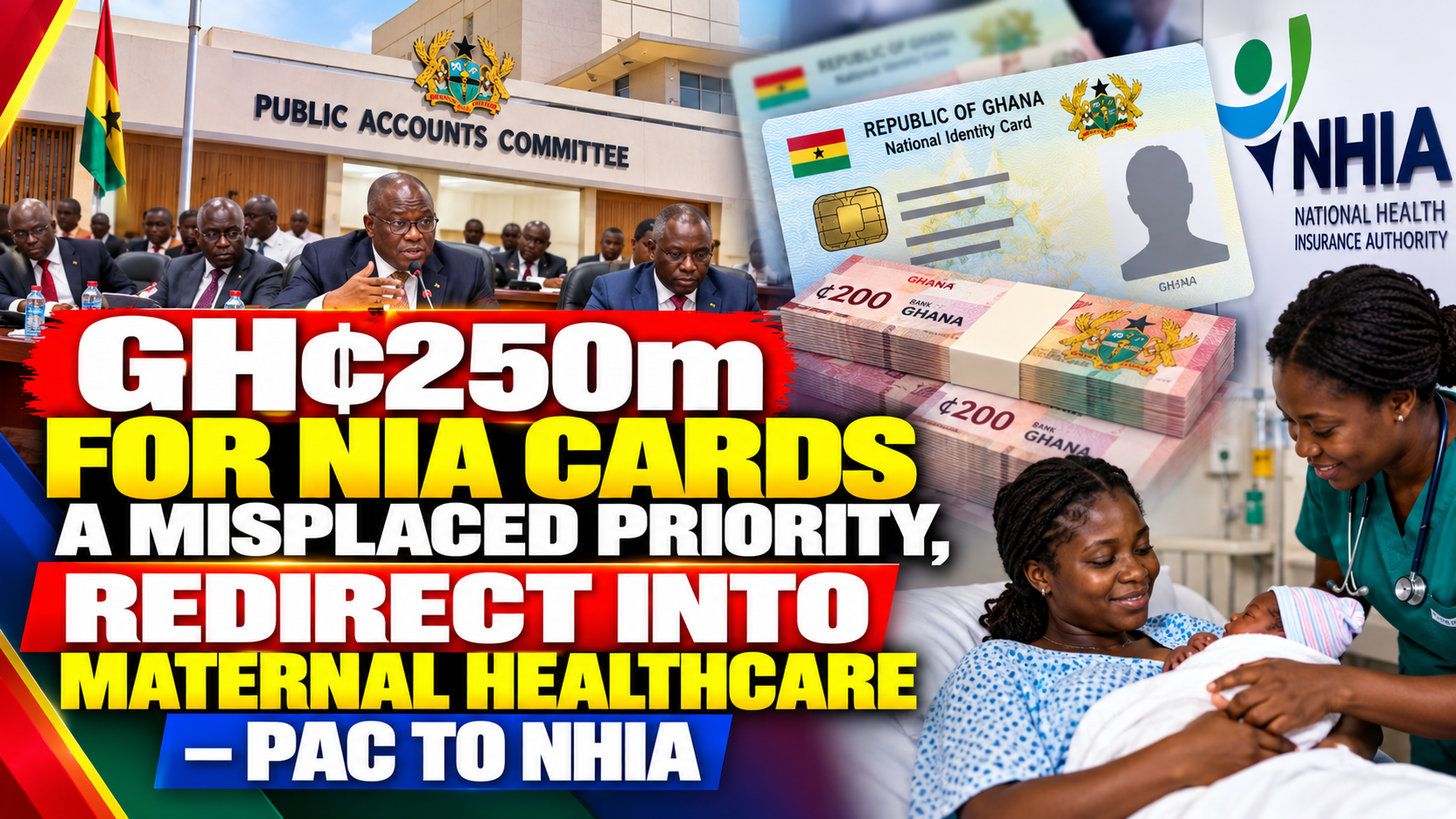
The Public Accounts Committee (PAC) has urged the National Health Insurance Authority (NHIA) to redirect funding towards maternal healthcare, questioning its allocation of GH¢250 million to the National Identification Authority (NIA) for the procurement of Ghana Cards.
The Committee’s Chairperson, Abena Osei-Asare, said the NHIA should consider providing comparable financial support for maternal healthcare interventions, particularly efforts to address anaemia during pregnancy and reduce preventable maternal deaths.
Her comments followed an appeal by Deputy Health Minister Dr Grace Ayensu-Danquah for dedicated funding to strengthen maternal healthcare services and improve emergency care for pregnant women.
“Last week, we sat here when NHIA told us that they gave GH¢250 million to NIA to buy cards, when NIA on their own can buy these cards, because they charge for every card that is made. So these are some of the interventions we want to see,” Ms Osei-Asare said.
She added that the NHIA should consider allocating funds to support maternal healthcare programmes at the primary healthcare level.
“If NHIA can make space of GH¢250 million for NIA to buy three million cards, they should be able to make the same for maternal healthcare,” she said.
Ms Osei-Asare said the Committee intended to pursue the matter during the upcoming budget period to secure funding for maternal health interventions.
The GH¢250 million allocation follows a proposal announced in 2024 to commit GH¢245 million towards procuring Ghana Cards for children aged six to 14. NHIA management subsequently informed the Committee that the arrangement had been implemented.
The Committee’s concerns come amid persistent challenges in reducing maternal deaths in Ghana. According to figures from the Ghana Health Service cited in the report, institutional maternal deaths increased from 779 in 2016 to 955 in 2025.
The institutional maternal mortality ratio also rose from 109.22 in 2023 to 110 in 2024.
Excessive bleeding, pregnancy-related high blood pressure, delayed referrals and gaps in emergency care remain among the challenges affecting maternal survival. Shortages of blood, essential medicines and critical-care equipment can further complicate the treatment of women experiencing childbirth emergencies.
Dr Ayensu-Danquah has called for increased government support and dedicated domestic financing for maternal healthcare, warning that insufficient funding could undermine Ghana’s ability to meet its 2030 maternal health targets.
She has also advocated for critical services to be covered under the National Health Insurance Scheme (NHIS), including intensive care, oxygen, blood supplies and specialist interventions.
The government launched the five-year Presidential Initiative on Maternal Health Emergency Response (PRIMER) on September 14, 2026, to improve emergency referrals, transportation, staffing and access to essential medical supplies.
The initiative is intended to strengthen the health system’s response to complications during pregnancy and childbirth and help reduce preventable maternal and newborn deaths.