




By Our Democracy News GH
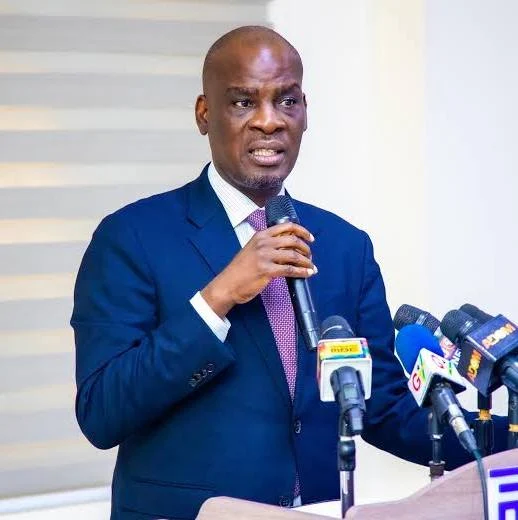
ACCRA, October 16, 2026 — Majority Leader James Agalga has warned journalists that publishing confidential parliamentary proceedings, embargoed documents and information from closed-door committee hearings without authorisation could expose them to contempt proceedings and other legal consequences.
Speaking at a workshop for members of the Parliamentary Press Corps in Accra on Thursday, October 15, Mr Agalga urged parliamentary reporters to respect rules governing in-camera proceedings, privileged information and matters pending before the courts.
“When matters are embargoed, committee hearings are conducted in-camera. And you chance upon material from the in-camera proceedings and decide to publish, you open yourself up for contempt of Parliament,” he cautioned.
The workshop was held under the theme, “Enhancing the Image of Parliament Through the Media: Expectations of the Majority Caucus.”
Mr Agalga explained that journalists must exercise particular care when reporting on confidential committee deliberations and court-related matters, warning that unauthorised disclosures could undermine parliamentary procedures and potentially interfere with the administration of justice.
He noted that Parliament has the power to cite individuals for contempt, just as the courts can impose sanctions for conduct that interferes with judicial proceedings.
Agalga Urges Accuracy and Fair Reporting
Beyond the issue of confidentiality, the Majority Leader called on journalists to uphold accuracy, fairness, balance and independence in their coverage of parliamentary proceedings.
He encouraged reporters to verify information through official parliamentary records, including the Order Paper and Votes and Proceedings, and to seek clarification from the appropriate parliamentary offices before publishing stories.
“We would rather answer 10 questions than correct one false headline,” he said.
Mr Agalga also cautioned journalists against misrepresenting the various stages of legislative business. He explained that a bill passing its second reading does not necessarily mean it has become law, while recommendations made by a parliamentary committee must be adopted by the House before they become the decision of Parliament.
According to him, a stronger understanding of parliamentary procedures would help reduce reporting errors and improve public understanding of the legislature.
Calls for Greater Coverage of Parliamentary Work
The Majority Leader urged the Parliamentary Press Corps to devote more attention to committee activities, legislative scrutiny, public hearings and constituency issues rather than concentrating predominantly on political confrontations in the chamber.
He said broader coverage of Parliament’s work would help citizens better understand the legislature’s responsibilities and its role in national development.
Majority Caucus Reaffirms Commitment to Press Freedom
Despite his warning about confidential information, Mr Agalga reaffirmed the Majority Caucus’s commitment to press freedom, transparency and accountability.
He said parliamentary leaders and members would work to improve journalists’ access to parliamentary proceedings, provide timely information and make themselves available for interviews, including on difficult and sensitive issues.
“In a constitutional democracy, free press is not a nuisance to be managed, but a pillar to be protected,” he stated.
He added that the Majority Caucus would not regard critical reporting as hostility and would welcome fact-based scrutiny of Parliament’s activities.
Mr Agalga acknowledged public concerns about absenteeism among lawmakers, partisan confrontations and the effectiveness of parliamentary oversight, indicating that the caucus would work to improve attendance, conduct in the chamber and participation in parliamentary business.
He also proposed regular engagements between parliamentary leadership and journalists, continuous training on legislative procedures, and stronger communication channels to facilitate fact-checking and clarification.
He stressed that cooperation between Parliament and the media was essential to strengthening public confidence in the legislature and Ghana’s democratic institutions.