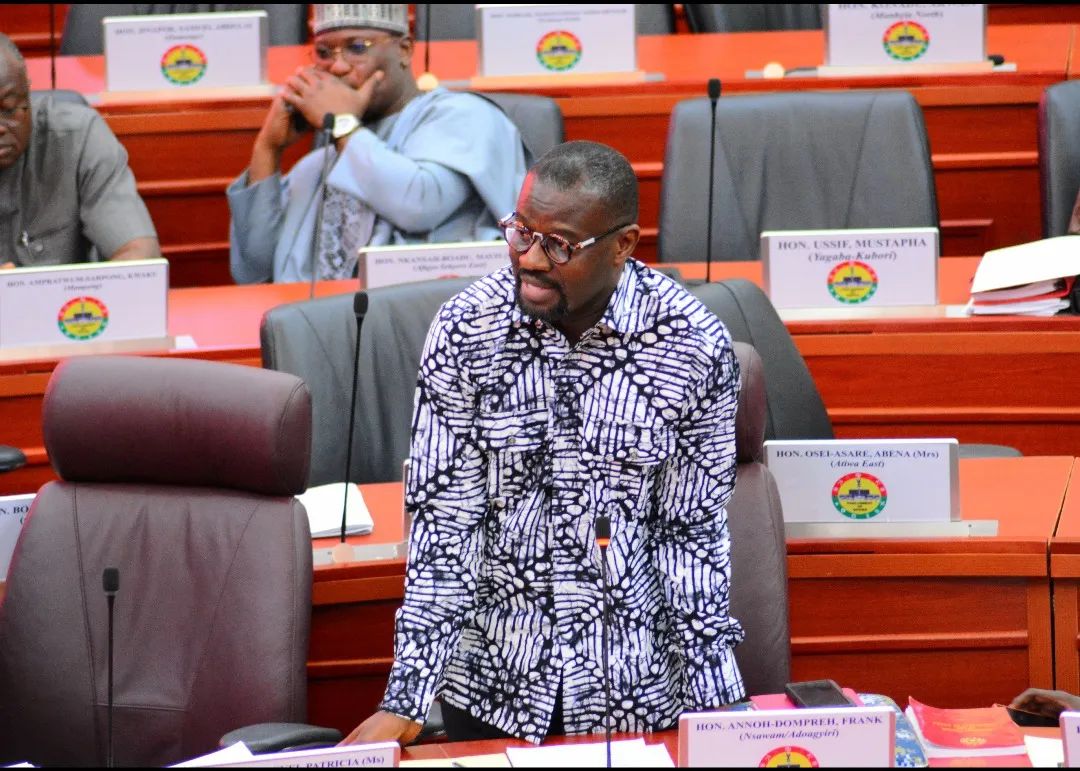






The Minority Chief Whip and Member of Parliament for Nsawam-Adoagyiri, Frank Annoh-Dompreh, has called for urgent legislation to criminalise ecocide in Ghana, warning that environmental destruction—particularly from illegal mining—is reaching alarming levels.Accra, Ghana — Speaking on the floor of Parliament of Ghana on Monday, Mr Annoh-Dompreh urged lawmakers to introduce a legal framework that would classify large-scale environmental destruction as a criminal offence.He argued that Ghana’s worsening environmental degradation, largely linked to illegal mining activities known locally as galamsey, requires decisive legislative intervention.“Honourable Speaker, I rise today with a profound sense of urgency and responsibility to speak on a matter that transcends partisan politics, economic growth, and short-term development agenda,” he said.He explained that ecocide refers to severe and widespread environmental destruction. According to an independent panel convened by Stop Ecocide International, ecocide involves unlawful or reckless acts committed with knowledge that they could cause severe or long-term damage to ecosystems.Mr Annoh-Dompreh noted that international law currently recognises four core crimes under the International Criminal Court—genocide, crimes against humanity, war crimes, and aggression—but ecocide has yet to be recognised as a standalone offence during peacetime.He said this gap creates a legal vacuum that allows corporations, governments and individuals to cause large-scale environmental destruction with limited criminal accountability.Citing global examples, the Nsawam-Adoagyiri MP referenced the ecological damage in the Niger Delta, where thousands of oil spills between 1970 and 2000 caused severe environmental and health impacts.Mr Annoh-Dompreh said the global push to criminalise ecocide is gaining momentum, noting that several countries have already incorporated the offence into domestic law. In 2023, Belgium became the first European Union nation to criminalise ecocide under its penal code reforms.Turning to Ghana’s situation, he warned that the country’s ecosystems are under severe pressure from deforestation, illegal mining and water pollution.“Recent reports indicate that up to 60 percent of our water bodies have suffered pollution due to illegal mining,” he said.According to him, environmental destruction poses serious risks to public health, agriculture and the long-term prosperity of future generations.He therefore urged Parliament to introduce a standalone legal provision defining and criminalising ecocide with clear thresholds for severity, duration and environmental impact.Mr Annoh-Dompreh also called on Ghana to champion the recognition of ecocide as an international crime by advocating at the Assembly of States Parties of the International Criminal Court.He further stressed the need to strengthen environmental enforcement institutions by equipping regulatory bodies and the judiciary with investigative authority, clear evidentiary standards and prosecutorial capacity.“Protecting our ecosystems is not an optional policy. It is a fundamental commitment to future generations,” he said.“Let us give meaning to that commitment by making ecocide a crime under Ghanaian law.”
Frank Annoh-Dompreh pushes for Ecocide Law as 60% of Ghana’s water bodies face pollution