


Government has presented to Parliament the Ghana Accelerated National Reserve Accumulation Policy (GANRAP), an ambitious plan to boost the country’s international reserves to 15 months of import cover by the end of 2028, as part of efforts to shield the economy from external shocks and reduce dependence on expensive foreign borrowing.
The policy, approved by Cabinet, is anchored on leveraging Ghana’s gold resources under the Ghana Gold Board Act, 2025 to accelerate reserve accumulation without increasing public debt. Government plans to purchase 3.02 tonnes of gold weekly, sourced from both the artisanal small-scale mining (ASM) sector and large-scale mining companies, with refined gold added to Ghana’s physical reserves.
Under GANRAP, Ghana is expected to:
• Reach 8.6 months of import cover by end-2026
• Exceed 11.8 months by end-2027
• Achieve 15 months by end-2028
This requires an average annual reserve build-up of 3.1 months of import cover over three years.
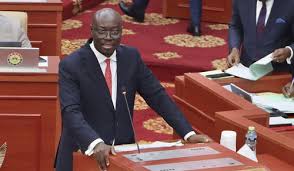
Presenting the policy statement, the Minister highlighted Ghana’s strong macroeconomic recovery in 2025 following the 2022–2023 crisis. Key indicators showed improved GDP growth, sharply lower inflation and interest rates, a stronger cedi, reduced public debt, and gross international reserves rising to US$13.8 billion, equivalent to 5.7 months of import cover.
Despite these gains, Government says the current reserve level remains inadequate to protect the economy from global shocks such as commodity price swings, geopolitical tensions, and climate-related disruptions.
Between 2017 and 2024, Ghana borrowed about US$21.7 billion to shore up reserves, incurring heavy interest costs. Eurobond issuances alone between 2018 and 2021 reportedly cost the country US$2.5 billion in interest payments.
By contrast, the Ghana Gold Board generated an estimated US$10 billion in foreign exchange in 2025 at a much lower cost, strengthening the case for a gold-led reserve strategy
In addition to gold purchases, Government plans to boost non-traditional exports, revive the cocoa sector, expand oil palm cultivation, mobilise remittances, develop new oil fields such as Pecan, and implement the Gas-to-Power Transformation Policy to reduce foreign exchange leakages.
Risks linked to gold price volatility, governance, production, and environmental damage will be addressed through hedging, independent audits, anti-illegal mining enforcement, and land reclamation programmes.
Described as Ghana’s first deliberate national policy to systematically build external buffers, GANRAP is intended to create a strong economic safety net, stabilise the cedi, and support long-term growth. Parliament is expected to debate and consider approval of the policy in the coming days.