



Strong reactions have emerged following the government’s decision to reduce Ghana’s cocoa producer price to GH¢2,587 per 64kg bag, with critics describing the move as a betrayal of campaign promises made to cocoa farmers.
The Minority in Parliament and some civil society groups have condemned the adjustment, arguing that farmers had expected higher earnings after political assurances of improved prices in the sector.
Opposition, Advocacy Groups React
Ranking Member on Parliament’s Food, Agriculture and Cocoa Affairs Committee, Dr. Isaac Yaw Opoku, described the price reduction as unprecedented, insisting that cocoa farmers deserve better treatment. He questioned why farmers should bear the burden of economic adjustments when they already struggle to enjoy the full benefits of the international cocoa market.
Similarly, the Centre for Democratic Movement (CDM) criticised the decision, saying farmers voted with the expectation of receiving not less than GH¢6,000 per bag, and accused authorities of failing to honour that pledge. The group labelled the price cut a moral and political misstep and called for urgent stakeholder engagement.
Some critics have gone further, describing the move as “brazen disrespect” toward cocoa farmers, arguing that the sharp drop undermines confidence in government policy and rural livelihoods.
Government Explains Price Adjustment
Government officials, however, maintain that the reduction forms part of broader reforms aimed at stabilising the cocoa sector. The Producer Price Review Committee set the new rate at GH¢41,392 per tonne, equivalent to GH¢2,587 per bag, citing prevailing international market conditions and financial challenges facing the industry.
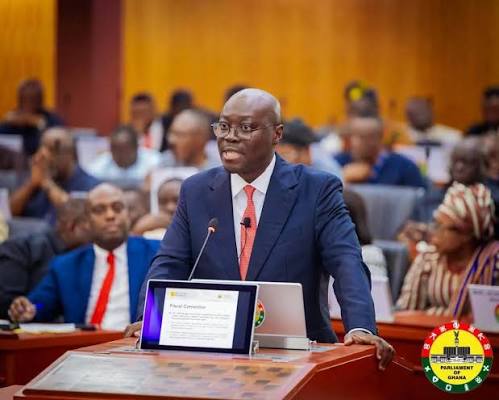
Finance Minister Dr. Cassiel Ato Forson explained that aligning producer prices with global market realities would help restore competitiveness, unlock liquidity in the cocoa value chain, and enable faster payments to farmers.
The adjustment also forms part of a wider restructuring plan that includes debt conversion, expanded local processing, and a new financing model designed to secure the long-term sustainability of Ghana’s cocoa industry.
Broader Industry Challenges
The cocoa sector has faced mounting pressure in recent months due to falling global prices, financing difficulties, and delayed payments to farmers. International reports indicate that unsold cocoa stocks and reduced buyer demand have contributed to the need for policy changes.
Ongoing Debate
While critics insist that reducing the producer price sends the wrong signal to farmers, government officials argue that the decision is necessary to protect the industry from deeper financial instability.
The controversy has reignited political debate over campaign promises, farmer welfare, and the long-term direction of Ghana’s cocoa economy, with stakeholders calling for further dialogue to balance economic realities with the livelihoods of cocoa-growing communities.