



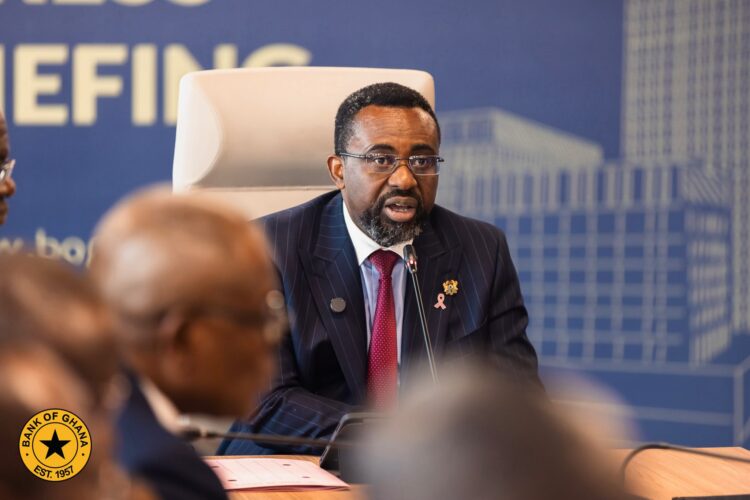
The Bank of Ghana (BoG) has rejected claims that it incurred losses from its gold operations in 2025, describing such assertions as speculative and premature while the central bank’s annual external audit is still ongoing.
In a statement, BoG said its audited financial statements, together with all relevant disclosures will be published next year in accordance with statutory requirements.
It therefore cautioned the public against relying on unverified figures currently circulating in the public domain.
The clarification comes on the back of praise from the International Monetary Fund (IMF) following Ghana’s successful completion of the fifth review of the IMF supported Extended Credit Facility (ECF) programme on December 17, 2025.
In its Country Report No. 25/343, the IMF acknowledged notable improvements in Ghana’s macroeconomic performance and commended the authorities for implementing strong corrective measures after policy reform setbacks in 2024.
Although the Fund noted delays in some structural reforms due to their complexity, it reported that the overall macroeconomic environment has improved significantly.
According to the report, real GDP growth exceeded expectations, inflation declined faster than projected and has moved into the Bank of Ghana’s target range, while international reserves continue to rise steadily.
Provisional data from the central bank indicate that gross international reserves could surpass US$13 billion by the end of 2025, further strengthening confidence in the economy.
The IMF also identified financial risks associated with the Domestic Gold Purchase Programme (DGPP) but acknowledged its broader contribution to macroeconomic stability.
Authorities noted that the programme has helped build international reserves, support currency stability, and provide access to foreign exchange without adding to public debt.
The Fund highlighted the operational role of GOLDBOD as an aggregator, noting its importance in channelling gold from the small-scale mining sector into the formal market and ensuring alignment with public policy objectives.
In addition, the IMF praised the Bank of Ghana’s new foreign exchange operations framework, describing it as a critical reform aimed at improving transparency, clarifying intervention triggers, and boosting confidence in the foreign exchange market.
To address fiscal and operational concerns related to the DGPP, the Bank of Ghana’s Board has approved reforms to enhance pricing mechanisms and operational efficiency in the programme’s downstream segment.
These measures are expected to take effect from January 2026 and will be supported by allocations in the 2026 national budget to fully resource GOLDBOD.